
Margin Call
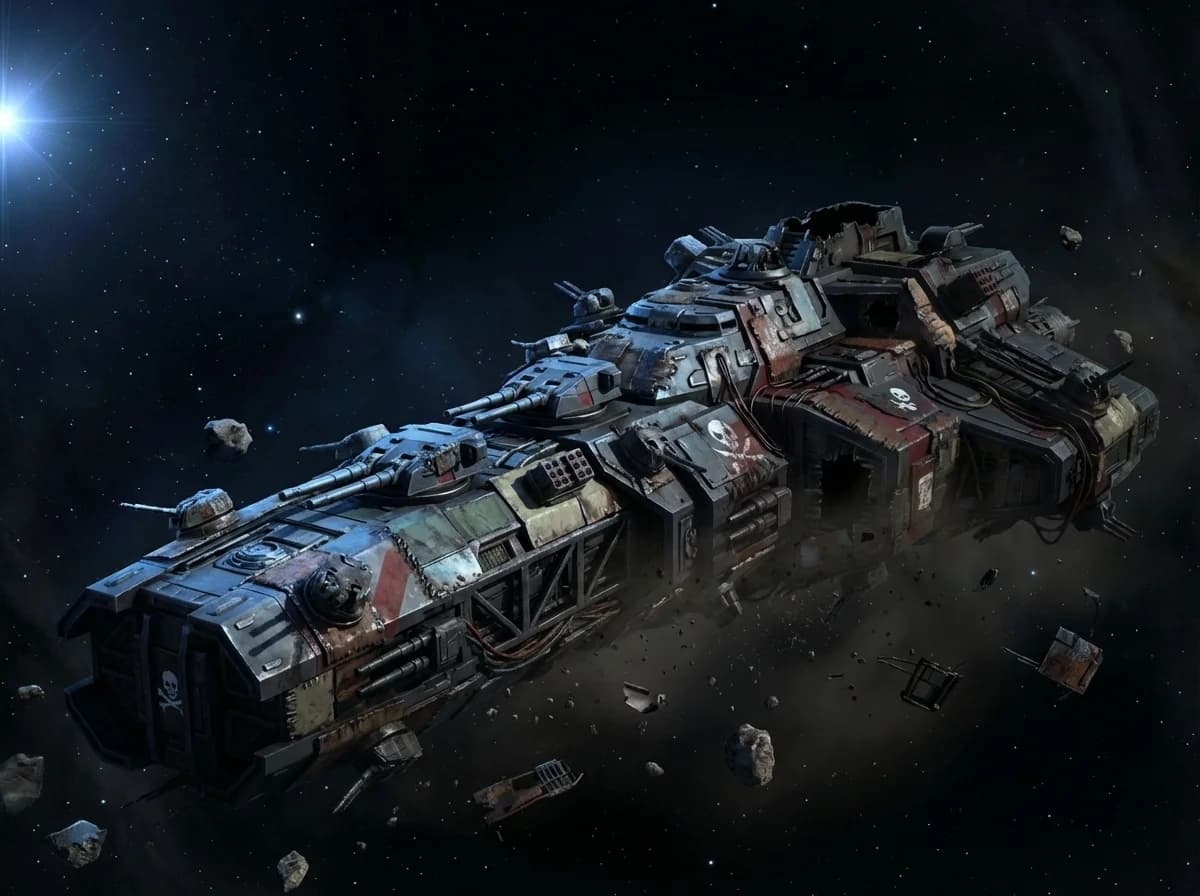
A Crimson Vanguard without fleet coordination hardware, shield array, or engine cores. Three weapon mounts and a hull built for the front of a fleet engagement remain. The original needed forty engine cores. Pirates source theirs differently.
Stats
Slots
Default Loadout
Requirements
Build Materials (12)
Lore
The Vanguard needed forty engine cores because Crimson fleet doctrine required the command ship to be everywhere. Lead the advance, absorb the initial contact, withdraw when flanked, re-engage on its own terms — the engine cores gave it the range and responsiveness to do all of this in a single engagement while the coordination hardware told the rest of the fleet what to do about it. It was the most expensive ship in any formation and built to justify that cost by being impossible to corner and impossible to ignore. Pirates couldn't source the engine cores. The coordination masts came down — cut at the base, the stubs still visible on the dorsal hull like stumps of something that used to be taller. The shield array is gone. What remains is what Crimson engineers put under all of that: a command-grade hull designed to survive being the most targeted ship in an engagement, because it always was. The Margin Call is slower and shorter-ranged than the Vanguard it came from. It doesn't coordinate anything. It absorbs fire and returns it, which is the only part of fleet command that translates. The Vanguard led from the front because its commanders believed that a ship which risks nothing wins nothing. Pirates kept the hull and the belief. The coordination hardware, it turned out, was optional.